
Replacing Wood and Engineered Siding
by Guest on May 7, 2012
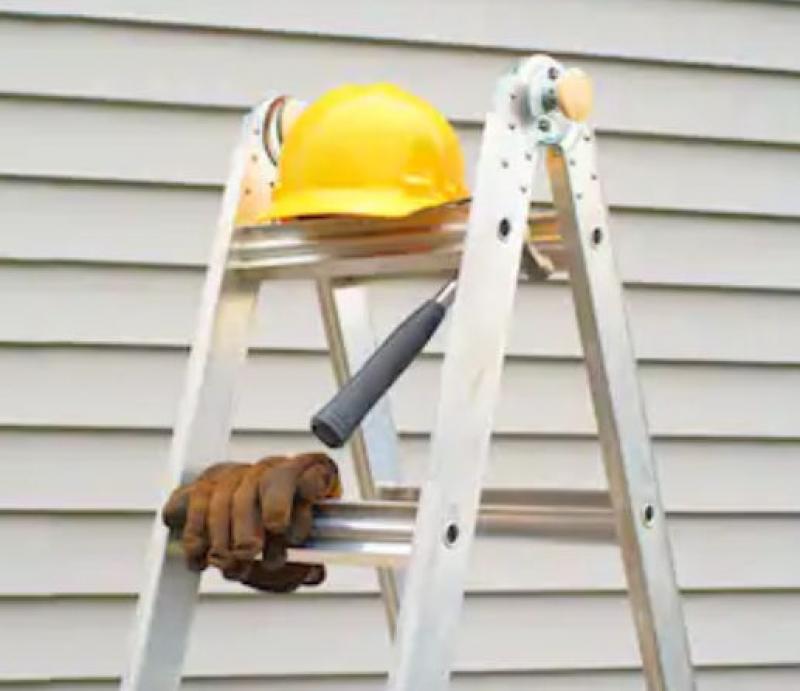
Wood and Engineered sidings are good choices for siding that last a long time but do not tolerate water penetration very well. This usually becomes evident where the siding meets horizontal surfaces such as porches, steps, and decks. Fortunately, it is fairly easy to replace. The biggest problem can be finding a replacement piece. The siding in this how-to is a smooth engineered siding and is very easy to replace as it has no texture.
Step 1:
Determine the area that has to be removed to effect the repair. Engineered siding will swell up and fall apart and wood sidings will deteriorate, split or rot. Locate the nearest wall studs and mark the pieces of siding to be removed along the middle of these studs. One method for locating the studs is to find the nails that hold the siding to the house. Remember that studs are usually installed 16" on center.
Step 2:
Use a utility knife to score the paint where the rows of siding overlap as it will ease the removal of the boards. This is especially important for engineered siding. Also, cut away any caulk that may be in the area.
Step 3:
If the piece of siding you want to remove is a whole piece then skip to Step 4. Otherwise, set the depth of cut on your circular saw to the same thickness as your siding. Cut along the lines you marked earlier. Your cuts will need to run into the course above the damaged course as the siding boards overlap some. If you are removing more than one course, you should stagger your cuts if possible.
Step 4:
Using a pry bar, loosen the course of siding above the repair area. Place a shim in between the courses to keep the siding away from the repair area. Using a reciprocating saw or (preferably) a hack saw blade, cut the nails in the above course that hold the damaged course.
Step 5:
Slide out the damaged course. Use a pry bar to remove the damaged siding if necessary. If there are stubborn pieces, a chisel will take care of it.
Step 6:
Inspect and repair any material behind the damaged siding. This might include sheathing, felt or a house-wrapping product.
Step 7:
Using the old siding as a pattern, cut the new siding to the proper dimensions. The new pieces should be about 1/16" shorter than the original to allow for expansion.
Step 8:
Prime the siding before you put it back on the house. Make sure that you use a good-quality exterior primer.
Step 9:
Slide the new siding back into place. If you have a tough time sliding the siding under, place a beater block against the bottom edge and drive it home. Using galvanized nails, secure the patch in place. Make sure that you nail into the studs. If you are replacing more than one course, start at the bottom.
Step 10:
Seal up any gaps or nail heads with a paintable exterior (www.dap.com) caulk. After the caulk cures, paint the repair area with exterior paint that is compatible with the primer you used.
Popular Articles
Three Places to Spend Money on the Exterior of Your Home
When you have the exterior of your home remodeled, you are investing, time, energy and convenience into the project and you want to make sure that...
107711 Views
Homemade Headboards-Make an Upholstered or Wooden Headboard
Homemade headboards can add a lot of personality to any bedroom. They can be coordinated with existing furniture and room decor or they can be the...
81112 Views
When to Use a Brush, Roller or Sponge Brush
Brushes are a good choice for painting trim and woodwork. They are also useful for cutting in the edges around the top and bottom edges and corners...
73665 Views
Creating a Cottage Kitchen with Bead Board
Kitchen decor can range from modern and bold to elegant and elaborate by using strategic kitchen pieces. One of the most popular decorating trends...
59482 Views
Gas Fireplace Diagnostics and Troubleshooting
Follow these steps for diagnosing and troubleshooting Gas Fireplaces repairs. For the average DIYer, this may seem intimidating, depending on the...
36398 Views
Latest Articles
Signs You Need Professional Plumbing Repair: Don’t Ignore These Warning Signs
Ignoring the signs of a pending plumbing disaster can lead to significant damage and costly repairs. For instance, homeowners might not realize...
on Jan 20, 2026
Beneath the Surface: Why Professional Trenchless Sewer Line Repair
Beneath the Surface: Why Professional Trenchless Sewer Line Repair is Essential for Modern Homeowners
on Jan 14, 2026
Hydro Jetting Services: Unclog Your Pipes with the Power of Water
When faced with stubborn clogs and slow drains, conventional solutions often fall short. But with the innovation of hydro jetting services,...
on Dec 15, 2025
Why Professional Heat Pump Installation is Key to Maximizing Efficiency and Longevity
Heat pumps are a highly efficient means of heating and cooling homes, reducing energy costs and contributing to environmental sustainability. To...
on Dec 15, 2025
Why Professional Boiler Repair is Essential for Home Safety and Comfort
Maintaining a warm and safe home environment is paramount for any homeowner. Your home's boiler system plays a critical role in this, but what...
on Nov 5, 2025
Featured Articles
What Type of Licensed Contractor Should You Hire?
on Feb 28, 2017
Hire Contractors / Estimates
Looking for a specialty project? There are many types of contractors available for your home improvement needs. Finding the right type of...
Actions
Top Categories
- Garden / Landscaping / Patio — 264
- Kitchen / Bathrooms — 240
- Real Estate / Finance — 203
- Appliance / Repair — 186
- Interior Design / Decor — 184
- HVAC / Air Conditioning — 150
- Cleaning / Maintenance — 144
- Improvements / Remodeling — 131
- Plumbing / Basements — 121
- Floors / Tile / Hardwood — 116
- Safety / Security — 114
- Doors / Garages — 113
Articles Archive
More DIY Articles
Grooved Composite Decking: Benefits and Best Practices
Composite decking has become increasingly popular over the last decade thanks to its durability, low-maintenance, and natural wood-like appearance....
Hydro Jetting Services: Unclog Your Pipes with the Power of Water
When faced with stubborn clogs and slow drains, conventional solutions often fall short. But with the innovation of hydro jetting services,...
Five Great Ways to Create a Relaxing and Modern Apartment Design
If there is one thing that renters struggle with, it is not the high rental fees or noisy neighbors-- it is the rental rules that limits the way...
Woodworking Safety Part II: Essential Woodshop Safety Supplies
Part I of this series covered safety attire that should be worn or available for use in a woodshop. In Part II, we cover some essential safety...
Four Things You Will Need For Do-It-Yourself House Flipping
There is a lot of money to be made flipping houses. Part of the success is in buying the right property, and then knowing what improvements will...