
Build a Rustic Bench by Recycling an Old Window
by Guest Post on Dec 19, 2010
The pastor of our church replaced the windows in his sunroom and rather than toss the drafty old ones, he called me. He knows I can't throw anything away. I look at everything and see the potential. I sent my son to pick them up and was stunned to see his pickup piled high when he returned.
Hmmm, those who live in glass houses? Well, I certainly had enough windows to build a glasshouse, but I decided to start small with my husband's assistance. We decided on a window bench.
The windows were wonderful. The panes even had the watery character of age. All window worship aside, though, there was quite a lot of prep work before we could even start the construction of the bench. The caulking on the window we chose was old, cracked and missing in quite a few places. To ensure the bench would be safe and usable once it was built, we had to remove the caulking and replace it. The window resembled a French door, with multiple panes. We did one side of the window, allowed the caulking to dry and turned it over to do the other side.
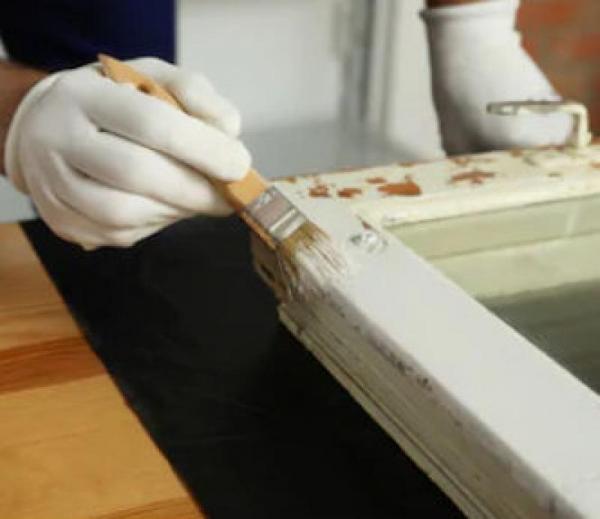
With the windows recaulked, it was time to make the bench. Well, not quite. Since there were so many window panes, we decided to paint the window with our chosen bench color before we built the bench. This made painting so much easier because we were able to lay the window flat and didn't have to work at odd angles. We chose a barn red color.
Materials for Making a Window Bench:
- Old window
- Caulk
- Measuring tape
- 7-inch wide board scraps, 3/4 inch thick
- 1x4's
- 4x4's
- 1x2's
- Miter saw
- Jigsaw
- Table saw
- Drill, a small bit, screwdriver bit
- 1 1/4 inch wood screws
- 2 1/2 inch wood screws
- Paint brush
- Palm sander
Steps for Building a Window Bench:
Step 1:
Create the bench seat. Measure the bottom edge of the window. This will be the length of your bench. Cut two-3/4 inch thick boards the length of your bench by approximately 7 inches wide, for the seat. Be thrifty and use scrap wood if you have it. The bench will be painted and will hide any irregularities. Lay the boards side-by-side to measure 14 inches wide. Cut three-1x4's, 14 inches long, for the seat braces. Place one brace on top and across each end of the seat boards and one across the middle. Drill pilot holes with a small drill bit through the braces and into the seat boards. Attach the braces to the seat with 1 1/4 inch wood screws in each of the pilot holes.
Step 2:
Create a collar around the seat. Cut two-1x4's, 14 inches long. Lay the bench seat with the braces on the top. Stand the 1x4's on your work surface, against the short end edges of the seat. Drill pilot holes through the 1x4's and into the side end edges of the seat. Attach using 1 1/4 inch wood screws. Measure the length of the seat, plus the additional thickness of the attached 1x4 ends. Use this measurement to cut one more 1x4. Stand the long 1x4 on your work surface, against the one edge of the seat. Attach in the same way as the end boards. Your seat now has a collar with an open back.
Step 3
Cut four-4x4 legs, 17 inches long. In my case, the window was long, so I cut two more legs to add support to the center of the bench. Stand the legs and place the bench seat, brace side down, on the legs. Fit the tops of two legs into the front corners of the seat collar and the other two flush with the back edge of the seat and the short collar ends. For the front legs, drill four pilot holes through the front collar board and into the legs and four pilot holes through the collar side and into the legs. Attach the legs using 2 1/2 inch wood screws. For the back legs, drill pilot holes through the short collar boards and into the legs and attach with wood screws. Turn the bench over and stand it on the legs. Drill four pilot holes through the top of the bench seat and into the top of each leg. Insert 2 1/2 inch screws to secure.
Step 4
Set the window on the back top edge of the bench. Measure from the floor to the top of the window. Use this measurement to cut two-1x2s for the window bench back brace. Turn the bench with the back facing you. Stand one back brace against a back leg, with the edge flush with the outer leg edge. The brace will extend above the bench. Drill pilot holes through the brace and into the top and bottom of the leg. Attach with 2 1/2 inch screws. Repeat with the remaining brace and back leg. Set the window on the bench and place it against the extended braces. Working from the back, drill through the brace and into the top and bottom of the window frame. Attach using 1 1/4 inch screws.
Step 5
Cut a 1x4 for the top of the armrest, 12 1/2 inches long. Cut two-2x2 armrest legs, 7 1/2 inches long. Center an armrest leg under the 1x4 armrest top, along one end. Drill two pilot holes through the armrest top and into the top of the leg. Attach with 1 1/4 inch screws. Repeat with the other leg on the opposite end of the armrest top. Stand one constructed armrest on one end of the bench, with one armrest leg against the window. The end of the armrest top will rest flush against the window with one edge even with the side of the window. Space and drill three pilot holes through the leg and into the window. Attach using 1 1/4 inch screws. Diagonally drill two pilot holes through opposite sides of the front armrest leg and into the top of the bench seat. Attach using 1 1/4 inch screws. Attach the remaining armrest in the same way.
Step 6
Paint the entire bench with the same color paint used on the window. Paint over the screw heads and touch up the paint on the window. Allow the paint to dry thoroughly. Use a palm sander to distress the surface and the edges of the bench, giving it an aged rustic look.
Credit: Cyndee Kromminga | © Cyndee Kromminga
Popular Articles
Three Places to Spend Money on the Exterior of Your Home
When you have the exterior of your home remodeled, you are investing, time, energy and convenience into the project and you want to make sure that...
109373 Views
Homemade Headboards-Make an Upholstered or Wooden Headboard
Homemade headboards can add a lot of personality to any bedroom. They can be coordinated with existing furniture and room decor or they can be the...
81459 Views
When to Use a Brush, Roller or Sponge Brush
Brushes are a good choice for painting trim and woodwork. They are also useful for cutting in the edges around the top and bottom edges and corners...
74417 Views
Creating a Cottage Kitchen with Bead Board
Kitchen decor can range from modern and bold to elegant and elaborate by using strategic kitchen pieces. One of the most popular decorating trends...
59820 Views
Gas Fireplace Diagnostics and Troubleshooting
Follow these steps for diagnosing and troubleshooting Gas Fireplaces repairs. For the average DIYer, this may seem intimidating, depending on the...
36673 Views
Latest Articles
Signs You Need Professional Plumbing Repair: Don’t Ignore These Warning Signs
Ignoring the signs of a pending plumbing disaster can lead to significant damage and costly repairs. For instance, homeowners might not realize...
on Jan 20, 2026
Beneath the Surface: Why Professional Trenchless Sewer Line Repair
Beneath the Surface: Why Professional Trenchless Sewer Line Repair is Essential for Modern Homeowners
on Jan 14, 2026
Hydro Jetting Services: Unclog Your Pipes with the Power of Water
When faced with stubborn clogs and slow drains, conventional solutions often fall short. But with the innovation of hydro jetting services,...
on Dec 15, 2025
Why Professional Heat Pump Installation is Key to Maximizing Efficiency and Longevity
Heat pumps are a highly efficient means of heating and cooling homes, reducing energy costs and contributing to environmental sustainability. To...
on Dec 15, 2025
Why Professional Boiler Repair is Essential for Home Safety and Comfort
Maintaining a warm and safe home environment is paramount for any homeowner. Your home's boiler system plays a critical role in this, but what...
on Nov 5, 2025
Featured Articles
What Type of Licensed Contractor Should You Hire?
on Feb 28, 2017
Hire Contractors / Estimates

Looking for a specialty project? There are many types of contractors available for your home improvement needs. Finding the right type of...
Actions
Top Categories
- Garden / Landscaping / Patio — 264
- Kitchen / Bathrooms — 240
- Real Estate / Finance — 203
- Appliance / Repair — 186
- Interior Design / Decor — 184
- HVAC / Air Conditioning — 150
- Cleaning / Maintenance — 144
- Improvements / Remodeling — 131
- Plumbing / Basements — 121
- Floors / Tile / Hardwood — 116
- Safety / Security — 114
- Doors / Garages — 113
Articles Archive
More DIY Articles
Using Budget Calculator Online Tools to Plan Your Real Estate Repayments
Buying a property, whether a piece of land or a home, is one of the most significant decisions you will ever make. In most cases, you will not have...
The Benefits of a Professional Removal Company
When the time comes to move to a new location, some people may worry. They may not believe that they can get everything done before the big day. If...
Why a Smart Sprinkler Controller is a Smart Investment
If you have been thinking about picking up a smart sprinkler controller, it’s time to pull the trigger. Smart and WiFi sprinkler controllers...
Everything You Need to Know about Surviving with a Small Bathroom
It can take a bit of ingenuity to get the most out of your small bathroom. This busy room may seem like it can’t spare a touch of spice for a shelf...
4 Ways to Keep Your Carpet in Tip-Top Shape
Let us face it: your carpet is more important than you think. After all, you step on your carpets every day. That is why you should make the effort...